Random Acts of Consciousness.
One Earth. One Humanity. One Shared Future.
Bring a conscious act to life.
One question. Two doors. Both add to the Wall of Consciousness.
What people are doing right now.
“TEST_iter59 luminary publish flow.”
“Testing video upload flow”
“Spreading the message of DOCM”
“I watered a few plants outside in my neighbourhood today.”
“TEST Iteration 51 — luminary description body for QA.”
“Every girl who returns to school lights a candle in the dark room of injustice.”
“he future is being built right now — in homes, classrooms, workplaces and communities. In quiet moments that may never make headlines, but change lives.”
“TEST_ QA random act with two attachments used for wall media badge testing.”
“A Viennese psychiatrist deported with his wife and parents to Theresienstadt in 1942 and later to Auschwitz, Viktor Frankl lost almost his entire family. He spent the years in the camps quietly observing which prisoners survived and why — and concluded it was almost always those who had something to live for. Freed in April 1945, he wrote 'Man's Search for Meaning' in nine days. Logotherapy, the school he founded, taught that humans can endure almost any 'how' if they have a 'why'.”
“A Polish social worker with the underground Council for Aid to Jews, Irena Sendler organised the smuggling of approximately 2,500 Jewish children out of the Warsaw Ghetto between 1942 and her arrest in October 1943 — in ambulances, toolboxes, sacks of potatoes, even coffins. She kept the children's real names in jars buried under an apple tree in a friend's garden so they could be reunited with their families after the war. Tortured by the Gestapo, she never revealed a name; she lived to be ninety-eight.”
“A young Dutch-Jewish writer in occupied Amsterdam, Etty Hillesum could have taken a desk job that exempted her from deportation. She refused. 'I want to share my people's fate,' she wrote, and went voluntarily into the Westerbork transit camp, where she worked at the hospital and consoled fellow prisoners through their final days. Her diaries and letters, smuggled out, were published decades later. She died in Auschwitz in November 1943, aged twenty-nine.”
“Born into slavery as Isabella Baumfree, freed at forty, she renamed herself Sojourner Truth and became one of the most powerful itinerant preachers and abolitionists of her century. At the 1851 Women's Rights Convention in Akron, Ohio, she rose unscheduled and delivered the speech later remembered as 'Ain't I a Woman?' — confronting an audience that wanted women's rights for white women only. She was unlettered, six feet tall, and the moral centre of the room.”
“At eleven Malala Yousafzai was already writing for the BBC under a pseudonym about life under Taliban rule in the Swat Valley. At fifteen, on 9 October 2012, she was shot in the head on her school bus. She survived, recovered in Birmingham, and addressed the United Nations on her sixteenth birthday: 'One child, one teacher, one book, one pen can change the world.' The Malala Fund she founded supports girls' education in countries where it remains contested.”
“In August 1980 Lech Wałęsa, an unemployed electrician, climbed the wall of the Lenin Shipyard in Gdańsk to join a strike. He emerged the leader of Solidarity, the first independent trade union in the Eastern bloc and a movement that grew to ten million members in months. Through martial law, imprisonment and the Nobel Peace Prize of 1983, he kept the movement non-violent. In 1990 he became the first democratically elected president of post-communist Poland.”
“Frederick Douglass taught himself to read as a child held in bondage, escaped at twenty, and became the most photographed American of the 19th century. His autobiographies — first published in 1845 — were so direct, so unmistakably the work of a free thinking mind, that they undid slavery's defenders by their existence alone. He advised Abraham Lincoln, argued for women's suffrage at Seneca Falls, and never stopped speaking the obvious truth that the abolitionists were merely catching up to.”
“When the polio vaccine Jonas Salk developed was announced in 1955, it could have made him one of the richest people alive. In a televised interview Edward R. Murrow asked who held the patent. 'Well, the people, I would say,' Salk answered. 'There is no patent. Could you patent the sun?' His refusal made the vaccine freely available; polio cases collapsed by 90% within five years. Conscience, in his hands, was a public-health intervention.”
“On taking the throne in 2013, Jorge Mario Bergoglio chose the name Francis — the first pope to do so — to signal an alignment with the poor. He has washed the feet of Muslim refugees and incarcerated women in Holy Thursday liturgies, written the encyclical Laudato Si' on the care of creation, and visited Lampedusa, the South Sudanese leadership in private negotiation, and the Mosul cathedral in ruins. His habits are small and consistent: he still lives in a guesthouse instead of the papal apartments.”
“Pete Seeger faced contempt-of-Congress charges in 1955 for refusing to identify other people as Communists before the House Un-American Activities Committee. Blacklisted from radio and television for almost two decades, he kept singing in schools and union halls. In 1966 he launched the sloop Clearwater to draw attention to the dying Hudson River; that campaign cleaned the river of PCBs and inspired the modern grassroots river-keeper movement worldwide.”
“A Canadian thoracic surgeon, Norman Bethune developed the first mobile blood-transfusion service in the Spanish Civil War, taking refrigerated blood directly to wounded soldiers at the front. In 1938 he travelled to northern China to do the same for the Eighth Route Army during the Sino-Japanese War, performing surgery under shellfire and training local medics. He died in 1939 from septicaemia after cutting his finger during an operation on a wounded soldier.”
“A German-Jewish political theorist who escaped Nazi Europe in 1941, Hannah Arendt covered Adolf Eichmann's 1961 trial in Jerusalem for The New Yorker. Watching the man who organised the deportation of millions, she expected monstrous evil — and instead found a thoughtless bureaucrat. Her phrase 'the banality of evil' was widely misread as exoneration. She meant the opposite: that the failure to think — to refuse one's own complicity — is itself the machinery of atrocity.”
“Sophie Scholl was a twenty-one-year-old biology student when she joined her brother Hans and a small group of friends in writing and circulating the White Rose leaflets — six anti-Nazi tracts that called for resistance from within Germany itself. On 18 February 1943 she was caught scattering the sixth leaflet from a balcony at the University of Munich. Four days later she was guillotined. Her last recorded words: 'How can we expect righteousness to prevail when there is hardly anyone willing to give themselves up individually?'”
“Joan Baez sang 'We Shall Overcome' from the Lincoln Memorial steps on 28 August 1963, walked the fifty-four-mile march from Selma to Montgomery in 1965, performed for César Chávez's farmworkers, refused to pay the portion of her taxes funding the Vietnam War, and toured the Hanoi underground during the 1972 Christmas bombings. Six decades in, her voice still carries the practice she made of it: to be where the singing was needed.”
“A playwright by trade, Václav Havel was a spokesman for Charter 77, the human-rights declaration that earned him almost five years in Czechoslovak prisons. His essay 'The Power of the Powerless' (1978) argued that totalitarian systems collapse when ordinary people stop participating in the small daily lies that sustain them. In November 1989 the Velvet Revolution proved him right. By December he was president of a free Czechoslovakia.”
“Toni Morrison was a senior editor at Random House and the mother of two young children when she began writing the novels that would change American letters — 'The Bluest Eye', 'Song of Solomon', 'Beloved'. She refused, throughout her career, to address her writing to a white reader; she wrote with all the implicit authority a white writer takes for granted. The Nobel committee, awarding her the 1993 Literature Prize, called her novels 'characterised by visionary force and poetic import.'”
Browse real, verified acts from people around the world.
A simple action, taken with awareness and intention, that creates a positive impact.
It’s about choosing to act from a deeper place of awareness.
Consciousness isn’t measured by what we know. It’s revealed by what we do.
Eight ways to bring consciousness to life.



Awareness begins in stillness.
Six ways to bring awareness to life today.
Every day brings a quiet choice — to act with awareness or without it. These six directions are where conscious action makes the loudest, longest ripple.
For Individuals
Consciousness starts within — small daily choices shape who we become.
- ✦Pause and breathe deeply
- ✦Practise gratitude every morning
- ✦Choose patience over reaction
- ✦Forgive — others and yourself
For People
Consciousness begins in how we treat one another.
- ✦Check in on someone
- ✦Listen without interrupting
- ✦Offer encouragement
- ✦Choose understanding over judgment
For Communities
Conscious action builds bridges where there are divisions.
- ✦Create connection
- ✦Support local initiatives
- ✦Bring people together
- ✦Help those who feel unseen
For Organizations
Conscious organisations put people at the centre of progress.
- ✦Lead with compassion
- ✦Support wellbeing
- ✦Create opportunities
- ✦Build trust through action
For Animals
Conscious care extends to every living being that shares our world.
- ✦Feed a stray, leave water out
- ✦Adopt — don't shop
- ✦Refuse cruelty in food, fashion, entertainment
- ✦Protect habitats and speak up for wildlife
For the Planet
Every conscious choice is a promise to leave the world better.
- ✦Plant a tree
- ✦Reduce waste
- ✦Protect natural resources
- ✦Choose sustainable practices
Your Random Acts of Consciousness are limitless. Please share.
Share your Random ActEvery action creates a ripple.
A ripple influences a person, a family, a community, a society. The future is shaped by countless moments of conscious action.
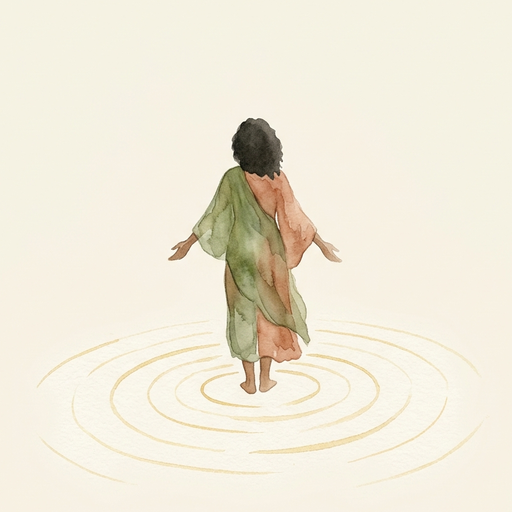
One Person
A single act can lift someone's day, restore hope, or remind them that they matter.
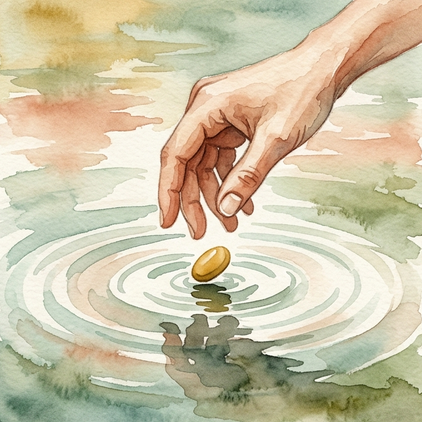
One Choice
Change rarely arrives all at once. It builds through conscious moments — one choice at a time.
One Act
A kind word. A responsible decision. A resource protected. A bridge built. Each act carries weight.
Acts of consciousness from around the world.
77 examples drawn from the lives of humanitarian, spiritual and civic leaders — joined by 8 acts shared through the movement. Tap any card to read more, leave a heart, or share it forward.
“TEST_iter59 luminary publish flow.”
“Testing video upload flow”
“Spreading the message of DOCM”

“I watered a few plants outside in my neighbourhood today.”
"TEST Iteration 51 — luminary description body for QA."
"Every girl who returns to school lights a candle in the dark room of injustice."
“he future is being built right now — in homes, classrooms, workplaces and communities. In quiet moments that may never make headlines, but change lives.”

“TEST_ QA random act with two attachments used for wall media badge testing.”

Working the Factory Floor
A brilliant philosopher who chose to work as a manual labourer to understand the lives she was writing about.

Giving Away the Patent
Discovered radium — and refused to patent it, so medicine could use it freely.

Blowin' in the Wind
Wrote at twenty-one the songs that became the soundtrack of the civil-rights and anti-war movements — and refused to be called their leader.
Drop the Debt
Used a stadium rock career as a platform to lobby world leaders into cancelling debt and funding AIDS treatment in Africa.