

DoCM is a global, non-political movement inviting people and institutions to act from higher awareness. By recognising consciousness as a human right and living by universal principles, we make peace practical and progress humane.
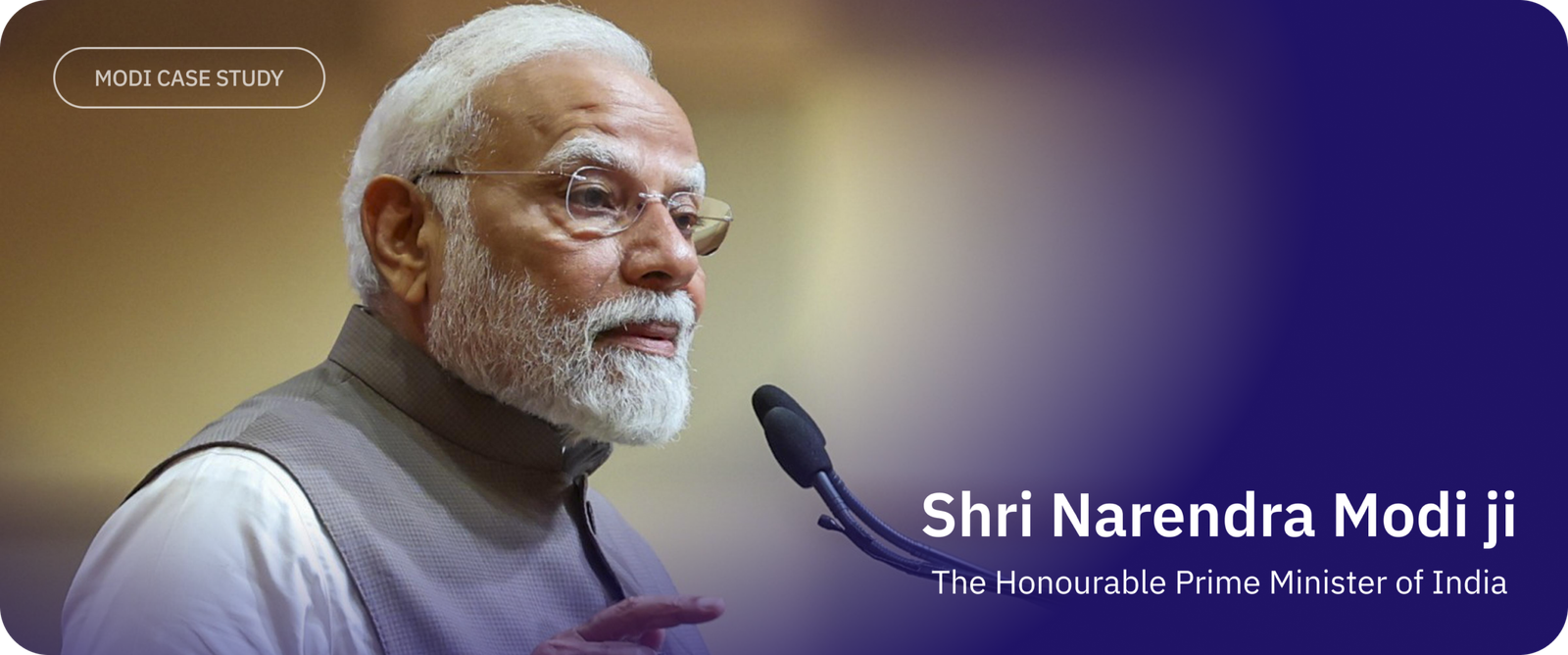
Rooted in consciousness, service, and collective responsibility, this declaration recognises the leadership of Honourable Prime Minister Shri Narendra Modi in advancing peace through sustainable development, inclusive progress, and global cooperation.
DoCM is a global, non-political movement inviting people and institutions to act from higher awareness. By recognising consciousness as a human right and living by universal principles, we make peace practical and progress humane.
Declarations have always moved history forward. DoCM offers a modern declaration: governance and daily life guided by consciousness. Its pathway translates inner awareness into public good across education, enterprise, policy and culture.
We recognize and honor leadership in all conscious activity across the globe. We study exemplary leaders whose work advances fraternity, nonviolence, and human dignity. A worked exemplar maps deeds to noble ideals, illustrating method, not partisanship.
Facilitating international conversations and conflict resolution forums rooted in awareness.
Supporting consciousness-based learning programs, academic partnerships, and youth engagement initiatives.
Facilitating international conversations and conflict resolution forums rooted in awareness.
Supporting consciousness-based learning programs, academic partnerships, and youth engagement initiatives.
Developing and publishing global frameworks that define consciousness in leadership, governance, and culture.
Advancing research and dialogue in conscious governance, environmental responsibility, and ethical leadership.
Developing and publishing global frameworks that define consciousness in leadership, governance, and culture.
Advancing research and dialogue in conscious governance, environmental responsibility, and ethical leadership.
Know a person or organisation whose good deeds uplift people or planet? Submit a nomination with evidence, references, and impact notes. Our panel will review, verify, and feature select stories.
The DoCM Global Council unites leaders, scholars, and policymakers to shape conscious governance. Through focused dialogues and council sessions, we explore how higher awareness can transform peacebuilding, ethics, climate action, and global systems. These forums bridge science, spirituality, and policy to guide solutions that honour people and the planet.
We are building a global Ambassadors network consisting of artists, athletes, scientists, and cultural leaders who champion consciousness and peace. DoCM Awards will honor annual exemplars across sectors via an independent jury.
The DoCM Global Council unites leaders, scholars, and policymakers to shape conscious governance. Through focused dialogues and council sessions, we explore how higher awareness can transform peacebuilding, ethics, climate action, and global systems. These forums bridge science, spirituality, and policy to guide solutions that honour people and the planet.
We are building a global Ambassadors network consisting of artists, athletes, scientists, and cultural leaders who champion consciousness and peace. DoCM Awards will honor annual exemplars across sectors via an independent jury.
Awareness in Action turns conscious values into real change, empowering women and youth, protecting children and elders, restoring harmony with nature, and fostering inclusion through unity in diversity and trust. It’s about living awareness through everyday compassion and collective responsibility.
Women & Youth: dignity, safety, opportunity
Children & Elders: rights, care, dignity, continuity, inclusion
Nature: renewable energy, clean
water, living rivers
Inclusion: unity in diversity, trust, mutual respect
Non‑violence is the commitment to resolving differences through respect, restraint, and dialogue rather than harm.
Every human being has equal value and equal right to dignity, opportunity, and justice.

Yoga and cultural exchange foster global unity and understanding. India’s soft power builds bridges between societies.
India’s soft power is expressed through cultural diplomacy, global yoga adoption, and the world’s largest diaspora. The UN resolution establishing International Yoga Day received support from 175 member states. Today, Yoga Day events have been reported in more than 190 countries. India’s diaspora—more than 35 million strong—serves as a bridge between nations.
Cultural diplomacy promotes peace by reducing cultural distance, fostering mutual respect, and building shared spaces of understanding.
✔️ 175 countries co-sponsored the UN Yoga Day resolution.
✔️ Yoga celebrated in 190+ countries.
✔️ India’s diaspora: 35.4 million people in 200+ countries.
✔️ One of the world’s strongest soft-power networks.
✔️ Cultural exchange strengthens global harmony.
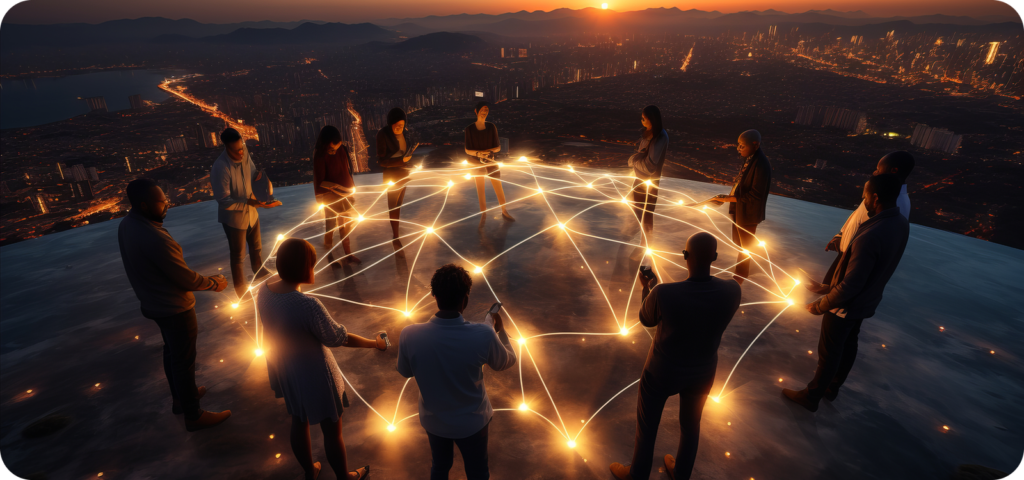
India’s digital systems enable identity, access, and inclusion at scale. Technology used consciously to uplift, not divide.
India’s Digital Public Infrastructure (DPI)—including Aadhaar, UPI, Jan Dhan, and DigiLocker—has redefined inclusive digital governance. Aadhaar enrollment stands at 1.35 billion people, ensuring identity for almost all adults. Jan Dhan accounts have crossed 515 million, while UPI handles more than 100 billion transactions annually. Over 50 countries are exploring DPI models inspired by India Stack.
This approach demonstrates how technology, when designed consciously, can expand dignity, access, and opportunity rather than deepen inequality.
✔️ 1.35 billion Aadhaar enrollments (~99% adult coverage).
✔️ 515.6 million Jan Dhan bank accounts.
✔️ 100+ billion UPI transactions per year.
✔️ 50+ nations exploring India Stack/DPI.
✔️ Recognized at G20 as a global public-good model.
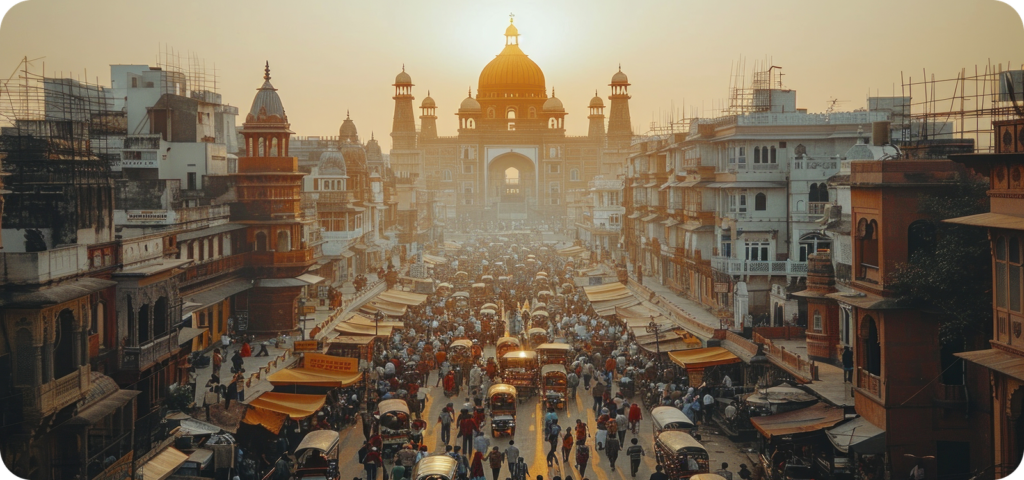
The world’s largest democracy showcases participation, transparency, and trust. Citizen-led legitimacy supports peaceful governance.
India conducts the world’s largest democratic exercise. In the 2024 Lok Sabha elections, approximately 642 million people voted out of 968 million registered voters. The scale, transparency, and logistical complexity of this process underscore the strength of India’s democratic institutions.
Conscious governance requires legitimacy rooted in citizen participation. India’s democratic processes demonstrate how political systems can accommodate diversity, pluralism, and peaceful transitions.
✔️ 642 million voters participated in 2024 elections.
✔️ 968 million registered voters—the world’s largest electorate.
✔️ Regular, peaceful electoral cycles.
✔️ High institutional transparency.
✔️ Demonstrates global-scale participatory governance.
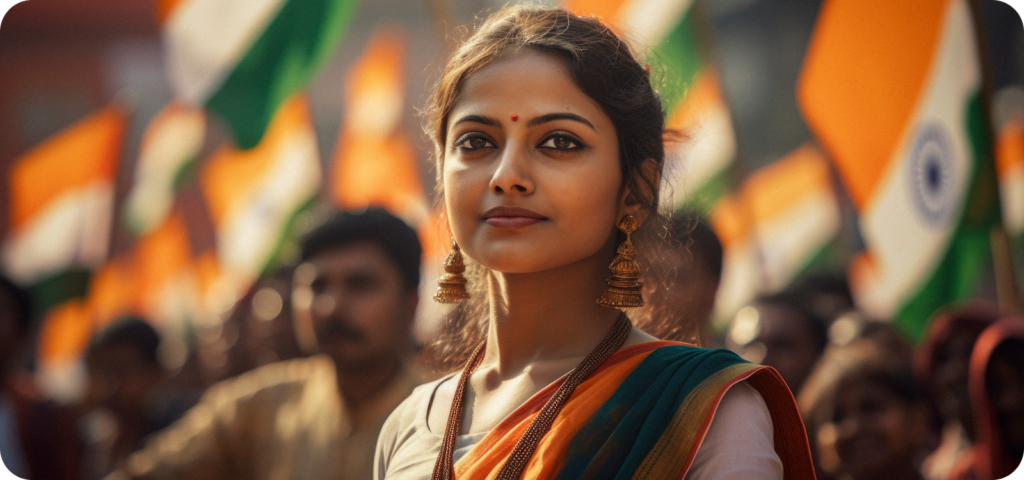
Women-led development drives financial inclusion and community strength. Empowering women strengthens the nation’s social fabric.
India’s women-led development initiatives are among the largest in the world. The National Rural Livelihoods Mission supports 9.7 million Self-Help Groups (SHGs), touching more than 101 million rural households. Meanwhile, schemes like Ujjwala Yojana and Jan Dhan Yojana have improved financial inclusion and access to clean energy. Today, more than 288 million women hold Jan Dhan accounts.
Women’s empowerment is essential to peace, as it directly strengthens community stability and intergenerational development. DoCM recognizes this as a fundamental expression of conscious governance.
✔️ 9.7 million SHGs covering 101 million rural households.
✔️ 96 million LPG connections issued to women.
✔️ 288+ million women have Jan Dhan accounts.
✔️ UN Women and World Bank acknowledge the scale of women-led inclusion.
✔️ Empowerment reduces inequality and strengthens social resilience.

A vibrant startup ecosystem and national skilling empower the next generation. Innovation shaping a conscious, future-ready nation.
India is the world’s third-largest startup ecosystem with more than 117,000 DPIIT-recognized startups and over 100 unicorns. This innovation ecosystem is complemented by large-scale skilling initiatives. The Skill India Mission has trained more than 60 million people, reflecting a commitment to harnessing demographic potential.
For DoCM, youth empowerment represents conscious nation-building. Innovation, skills, and entrepreneurship create pathways to prosperity and reduce social fragmentation.
✔️ 117,000+ recognized startups (3rd largest globally).
✔️ 100+ unicorns across sectors.
✔️ 60+ million people trained through Skill India.
✔️ Strong global investor and technology ecosystem participation.
✔️ Youth-driven innovation supports long-term societal stability
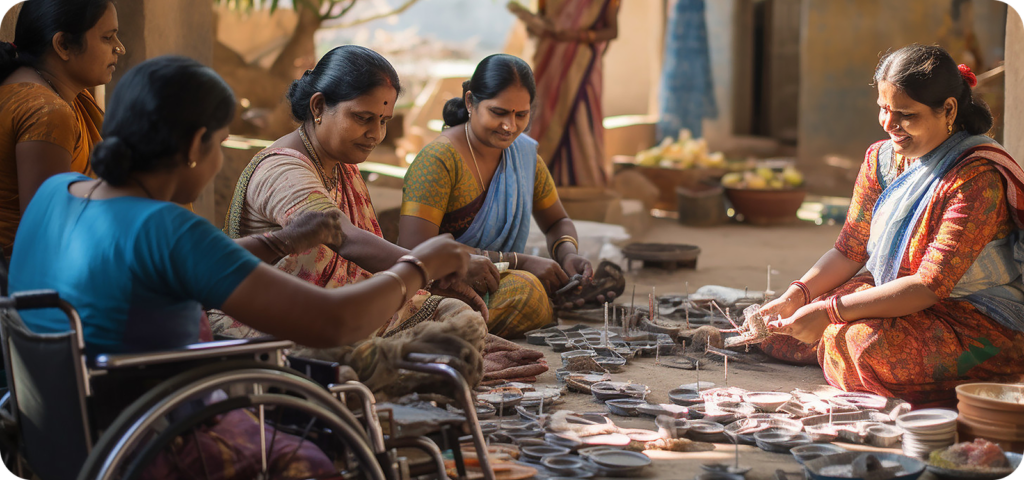
Historic poverty reduction uplifted millions into dignity and opportunity. Social progress as a foundation for long-term harmony.
According to UNDP’s Multidimensional Poverty Index (MPI), India lifted 415 million people out of multidimensional poverty between 2005/06 and 2019/21—one of the largest poverty reductions in modern history. Improvements were recorded across nutrition, school attendance, sanitation, electricity access, and housing quality. In addition, food-security programs continue to support more than 800 million people.
Reducing vulnerability at this scale strengthens social cohesion and long-term peace. DoCM views poverty alleviation as a critical expression of conscious systems thinking—improving stability, dignity, and opportunity for millions.
✔️ 415 million people exited multidimensional poverty (UNDP MPI).
✔️ 800+ million receive food grains under national food-security programs.
✔️ 100+ million household toilets built under Swachh Bharat.
✔️ ~600,000 villages declared ODF / ODF-Plus.
✔️ Significant gains in housing, sanitation, nutrition, and schooling.
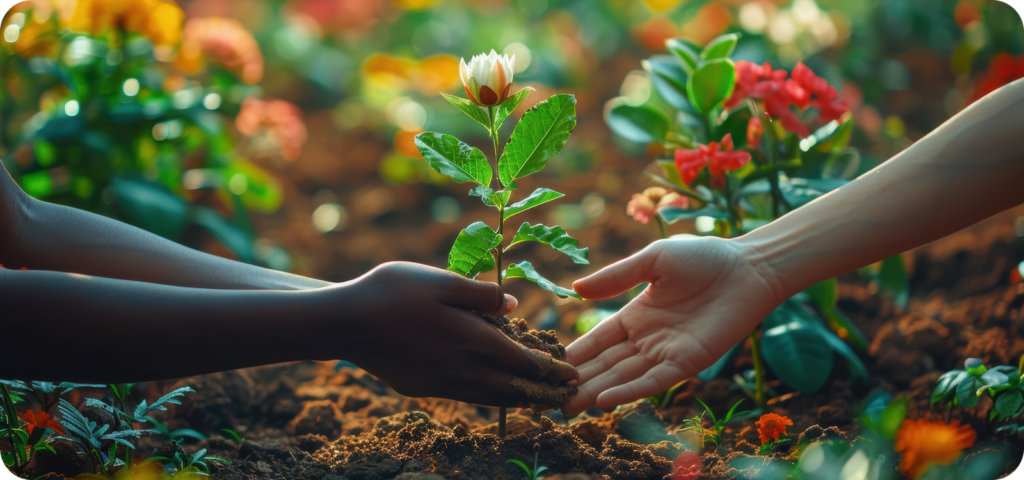
Leading global clean-energy action through solar alliances and equitable climate policy. Environmental responsibility as peace-building.
India has emerged as a leading voice for equitable climate action, championing renewable energy adoption and climate justice. The International Solar Alliance (ISA), co-founded by India, now includes 124 member and signatory countries. India has committed to achieving 500 GW of non-fossil fuel electricity capacity by 2030—one of the world’s most ambitious clean-energy transition targets.
From a consciousness perspective, environmental responsibility is inseparable from peace. Climate instability fuels conflict, migration, and economic stress. India’s leadership in renewable energy, affordable solar deployment, and climate diplomacy advances long-term global stability.
✔️ 124 countries are members/signatories of the International Solar Alliance.
✔️ ISA global ambition: 1,000 GW (1 TW) of solar capacity by 2030.
✔️ India’s domestic clean-energy target: 500 GW non-fossil capacity by 2030.
✔️ Strong advocacy for climate finance and equitable transitions.
✔️ Recognized internationally during G20 and COP negotiations.
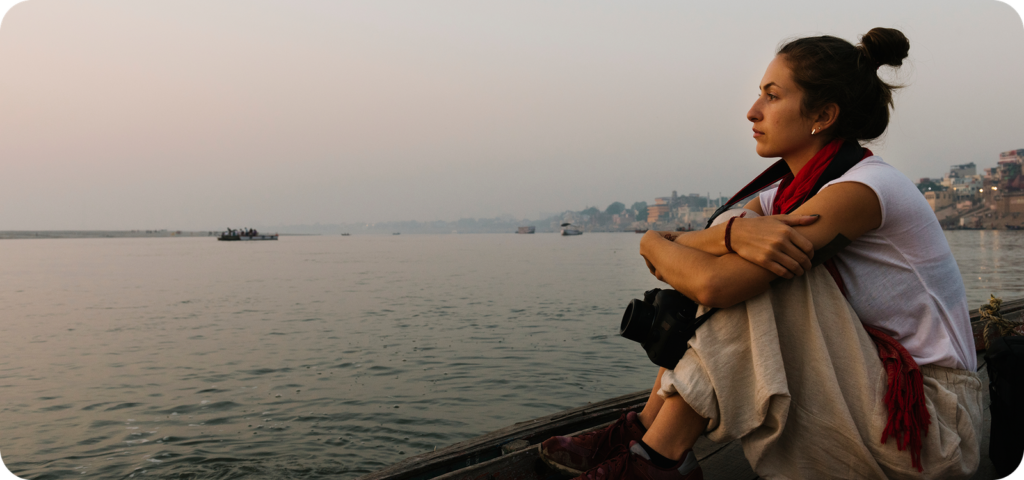
India’s restraint and dialogue-first diplomacy reduce risks in a sensitive region. Ethical strength that upholds global stability.
India maintains a long-standing doctrine of nuclear restraint and responsible behavior, even while positioned in one of the world’s most complex geopolitical environments. Its declared “No First Use” policy and emphasis on deterrence without provocation reduce escalation risks in a region home to nearly 2 billion people. India consistently advocates for dialogue, de-escalation, and strategic stability.
From DoCM’s standpoint, conscious governance includes measured strength, ethical restraint, and long-horizon thinking. India’s approach reflects responsible stewardship in a nuclearized region, contributing to global peace through predictability and restraint.
✔️ India’s population: 1.43+ billion (~17% of humanity).
✔️ South Asia’s total population: ~2 billion.
✔️ India maintains a declared No First Use nuclear doctrine.
✔️ Frequently calls for dialogue-first diplomacy at the UN.
✔️ Demonstrates restraint in a high-risk nuclear region.
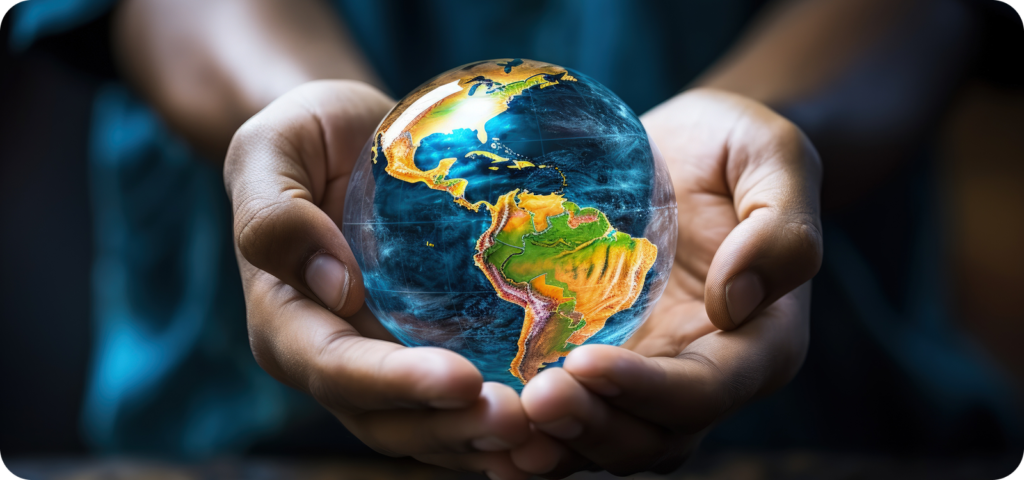
Unity for All is the understanding that our differences exist within a shared human fabric, and that cooperation is stronger than division.
Unity for All does not ask everyone to be the same; it calls us to recognise that diversity lives within a single human family. This principle affirms that people of different cultures, beliefs, identities, and backgrounds can coexist with respect while working toward shared goals. Unity is the choice to prioritise connection over separation, collaboration over competition, and solutions over blame.
In conscious governance, unity means designing systems that include rather than exclude, listen rather than label, and bridge rather than polarise. It invites dialogue across differences and seeks common ground even in difficult conversations. Unity supports peace by reducing “us versus them” thinking and encouraging a sense of shared destiny. When people experience themselves as part of something larger than individual interest—whether a community, a nation, or humanity as a whole—cooperation becomes natural and conflict loses its appeal.
✔️ Reduces polarization and “us vs. them” narratives.
✔️ Strengthens social cohesion and mutual trust.
✔️ Encourages collaboration across cultures, beliefs, and identities.
✔️ Supports peaceful conflict resolution and shared problem-solving
✔️ Builds a sense of shared purpose at local, national, and global levels.
Humanity must protect and restore the planet through sustainable choices and collective responsibility.
The wellbeing of the planet is the foundation for all life. This principle recognises that environmental stability is essential for human survival, health, and prosperity. Climate change, biodiversity loss, pollution, and resource depletion threaten global peace by creating displacement, scarcity, and conflict. Sustainable environmental action is not optional—it is an urgent shared responsibility.
Conscious governance requires decisions that honour ecological boundaries, reduce carbon impact, and promote renewable, regenerative systems. Communities and organisations must collaborate on climate resilience, environmental protection, and responsible consumption. Protecting Earth ensures that future generations inherit a stable, livable world.
✔️ Prevents conflict driven by resource scarcity.
✔️ Protects ecosystems that sustain life.
✔️ Reduces climate-related instability and displacement.
✔️ Builds global cooperation for a shared future.
✔️ Ensures long-term survival and wellbeing.
Organisations must act ethically, responsibly, and sustainably, contributing to the wellbeing of people and the planet.
Conscious organisations operate with awareness of their impact on employees, communities, and the environment. They prioritise ethical decision‑making, fairness, safety, transparency, and sustainability alongside financial performance. These organisations understand that long-term success comes from trust, accountability, and purposeful action.
Conscious governance calls for institutions—public or private—to adopt practices that reduce harm, promote wellbeing, and create value responsibly. Workplaces that encourage dignity, diversity, and growth create healthier societies by extension. When organisations elevate their consciousness, they influence broader economic and social systems toward peace, fairness, and sustainability.
Women deserve full equality, safety, dignity, and representation across all areas of life.
Women’s rights are an essential component of human rights and a prerequisite for peaceful, just societies. Empowering women ensures that half of humanity can participate fully in economic, social, political, and cultural life. Equality in education, safety, health, employment, and leadership strengthens family structures, accelerates development, and reduces systemic inequality.
This principle calls for dismantling barriers that restrict women’s choices or limit their opportunities. Conscious governance upholds the right of women to live free from violence, discrimination, and prejudice. A society that values women’s autonomy and leadership fosters greater resilience, innovation, and collective wellbeing. When women thrive, entire communities progress.
✔️ Reduces gender inequality and violence.
✔️ Strengthens families, communities, and economies.
✔️ Encourages inclusive leadership and representation.
✔️ Aligns with global human rights frameworks.
✔️ Improves social stability and long-term peace.
Elders carry lived experience and insight, deserving respect, inclusion, and meaningful participation in society.
Elders play an essential role as carriers of wisdom, memory, and intergenerational perspective. Their experiences help societies understand context, continuity, and long‑term consequences. Honoring elders means valuing their voices, ensuring their wellbeing, and including them in decision‑making processes where their insights can guide younger generations.
This principle promotes a culture of respect, care, and connection. Conscious societies recognise that elders require support—healthcare, dignity, security, and companionship. Their wellbeing reflects how a society values its history and humanity. When elders are respected, communities strengthen their moral fabric, deepen empathy, and preserve intergenerational harmony.
✔️ Preserves historical memory and cultural continuity.
✔️ Strengthens empathy and intergenerational respect.
✔️ Supports social stability and shared wisdom.
✔️ Upholds dignity and protection for vulnerable adults.
✔️ Encourages long-term thinking in policy and society.
Children deserve protection, safety, education, and nurturing environments that enable them to thrive.
Children represent the future of every society, and safeguarding their wellbeing is both a moral and practical responsibility. This principle recognizes the right of every child to safety, nutrition, healthcare, education, emotional support, and opportunities for growth. When children are protected from abuse, exploitation, discrimination, and neglect, they grow into confident, healthy, conscious adults capable of contributing meaningfully to society.
Conscious governance places children at the center of long-term planning. Policies that support early childhood development, secure family environments, access to education, and safety systems build strong foundations for peaceful societies. Protecting children ensures generational stability—reducing cycles of trauma, poverty, and conflict. When children are empowered, societies benefit from more capable, empathetic, and aware future leaders.
✔️ Prevents long-term social harm and trauma.
✔️ Builds foundations for healthier, more resilient societies.
✔️ Strengthens future leadership and human potential.
✔️ Protects vulnerable groups from exploitation.
✔️ Ensures intergenerational peace and stability.
Freedom of thought, speech, and expression safeguards the right to think, question, create, and communicate without fear.
Freedom of thought, speech, and expression is essential for human progress. It protects an individual’s right to explore ideas, form opinions, and express their voice openly. This freedom nurtures creativity, innovation, scientific advancement, cultural diversity, and democratic participation. A society that enables free expression becomes a space where diverse perspectives can coexist and dialogue can resolve differences.
In governance, freedom of expression encourages accountability, transparency, and constructive criticism, preventing the concentration or abuse of power. For communities, it enables cultural evolution, intellectual exchange, and deeper understanding between groups. Conscious leadership values open discourse because it supports informed decision‑making and strengthens collective intelligence. Freedom is most meaningful when practiced responsibly—recognizing the impact of our words while upholding the rights of others to speak.
✔️ Enables innovation, culture, and intellectual growth.
✔️ Encourages transparent, accountable leadership.
✔️ Reduces fear‑based conflict.
✔️ Strengthens democratic values and human agency.
✔️ Creates room for dialogue in diverse societies.
Every human being has equal value and equal right to dignity, opportunity, and justice.
Equality of all humans affirms that no individual or group is inherently superior or inferior. It rejects discrimination based on identity, status, background, gender, age, or belief. This principle ensures that systems, communities, and institutions are shaped with fairness at their core. Equal access to resources, rights, and protections allows societies to realize the full potential of their people. When equality is upheld, individuals are empowered to contribute, innovate, and participate without fear or exclusion.
In conscious governance, equality demands transparent systems that prevent bias and protect human dignity. It encourages leaders and institutions to dismantle barriers that restrict growth, whether social, economic, or cultural. Within communities, equality strengthens social cohesion by fostering respect and shared belonging. It also aligns with universal human rights frameworks that underpin global peace and cooperation.
✔️ Reduces conflict rooted in discrimination or inequality.
✔️ Strengthens fair access to opportunities and justice.
✔️ Builds cohesive, resilient societies.
✔️ Aligns with global human rights standards.
✔️ Encourages inclusive growth and representation.
Non‑violence is the commitment to resolving differences through respect, restraint, and dialogue rather than harm.
Ahimsa, or non‑violence, is a foundational principle for building peaceful societies. It recognizes that disagreements, diversity, and competing interests are natural in human life—but violence is not an acceptable means of resolving them. At a personal level, non‑violence reflects emotional maturity, self-awareness, and empathy in daily interactions. At a societal level, it demands systems that protect dignity, reduce harm, and encourage dialogue. Non‑violence is not passive; it requires active choices—choosing patience instead of aggression, accountability instead of retaliation, and solutions instead of conflict.
In governance, non‑violence reframes leadership as responsibility rather than dominance. It calls for decisions that reduce harm, prevent escalation, and prioritise life and wellbeing. In communities, it nurtures trust and long-term coexistence. Ahimsa becomes a practical tool for stabilising societies, lowering conflict cycles, and enabling collaboration across ideological, cultural, or national divides. When non‑violence becomes a shared norm, progress accelerates because fear and hostility no longer obstruct collective action.
✔️ Reduces individual and collective harm.
✔️ Enables dialogue-based problem solving.
✔️ Prevents cycles of retaliation and instability.
✔️ Builds trust in communities and institutions.
✔️ Supports global peace through restraint and ethical decision‑making.

India’s global health support during crises strengthened shared resilience. A model of conscious, compassionate international leadership.
India’s humanitarian response during global crises—particularly COVID-19—demonstrated large-scale solidarity with vulnerable nations. India supplied medicines, PPE, vaccines, and medical support to more than 150 countries across Asia, Africa, Europe, Latin America, the Gulf, and the Pacific. Through the Vaccine Maitri initiative, India delivered 301 million vaccine doses to 99 countries and two UN entities, supporting global health systems at a time when access to vaccines was limited.
This approach strengthened international goodwill and demonstrated a model of responsible global citizenship. From a peace-building lens, equitable health support reduces global vulnerability, prevents destabilization caused by pandemics, and reinforces the idea of a shared human destiny—fully aligned with DoCM’s consciousness-led governance philosophy.
✔️ 150+ countries received Indian medical assistance during COVID-19.
✔️ 301 million vaccine doses supplied to 99 countries + 2 UN entities.
✔️ Supported countries across Asia, Africa, Latin America, Pacific Islands.
✔️ Recognized by WHO, UN agencies, and multiple heads of state.
✔️ Strengthened global health preparedness during a systemic crisis.